Historic Homicide Investigation - Brenda LeBlanc

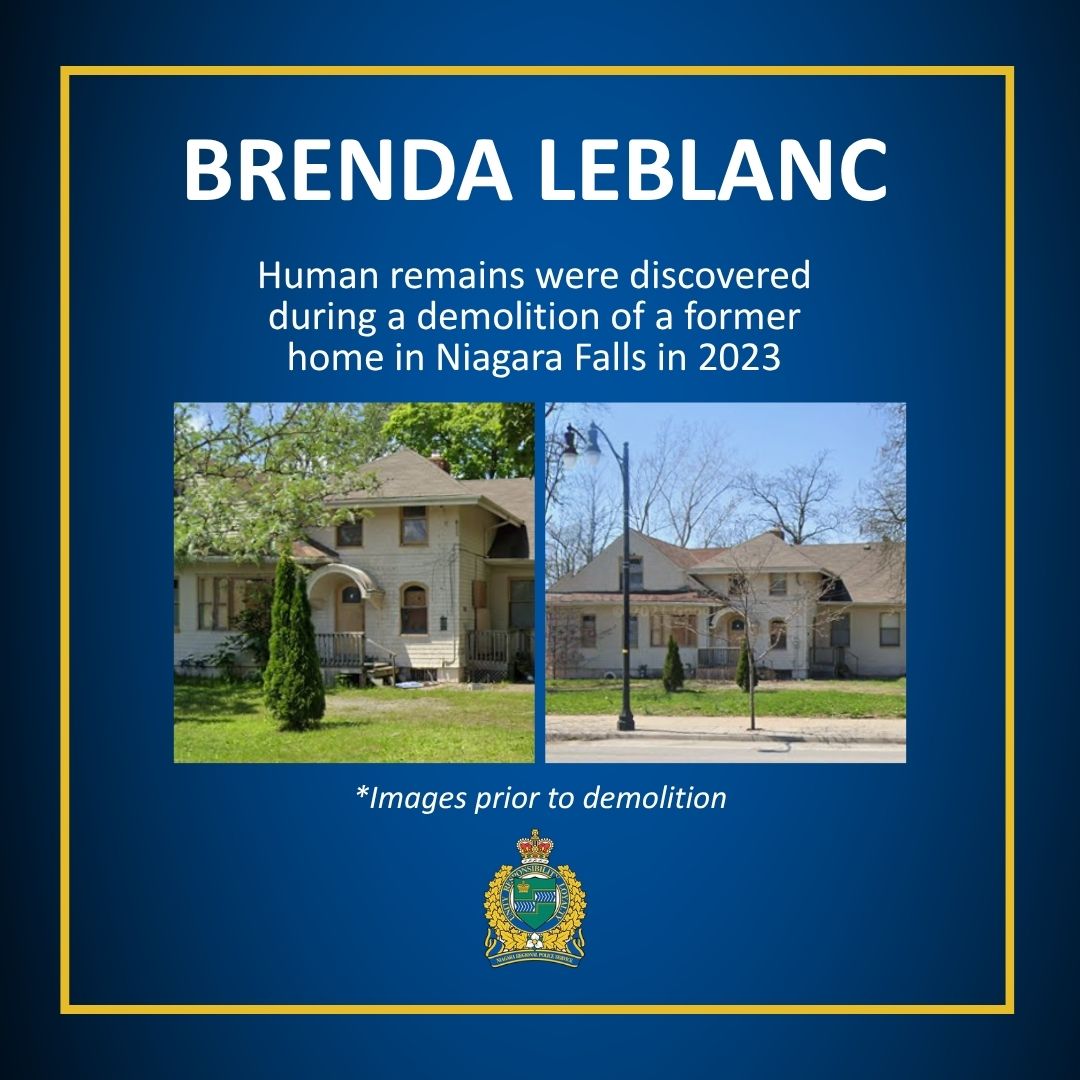
In 2023, human remains were discovered during the demolition of a former home in Niagara Falls.

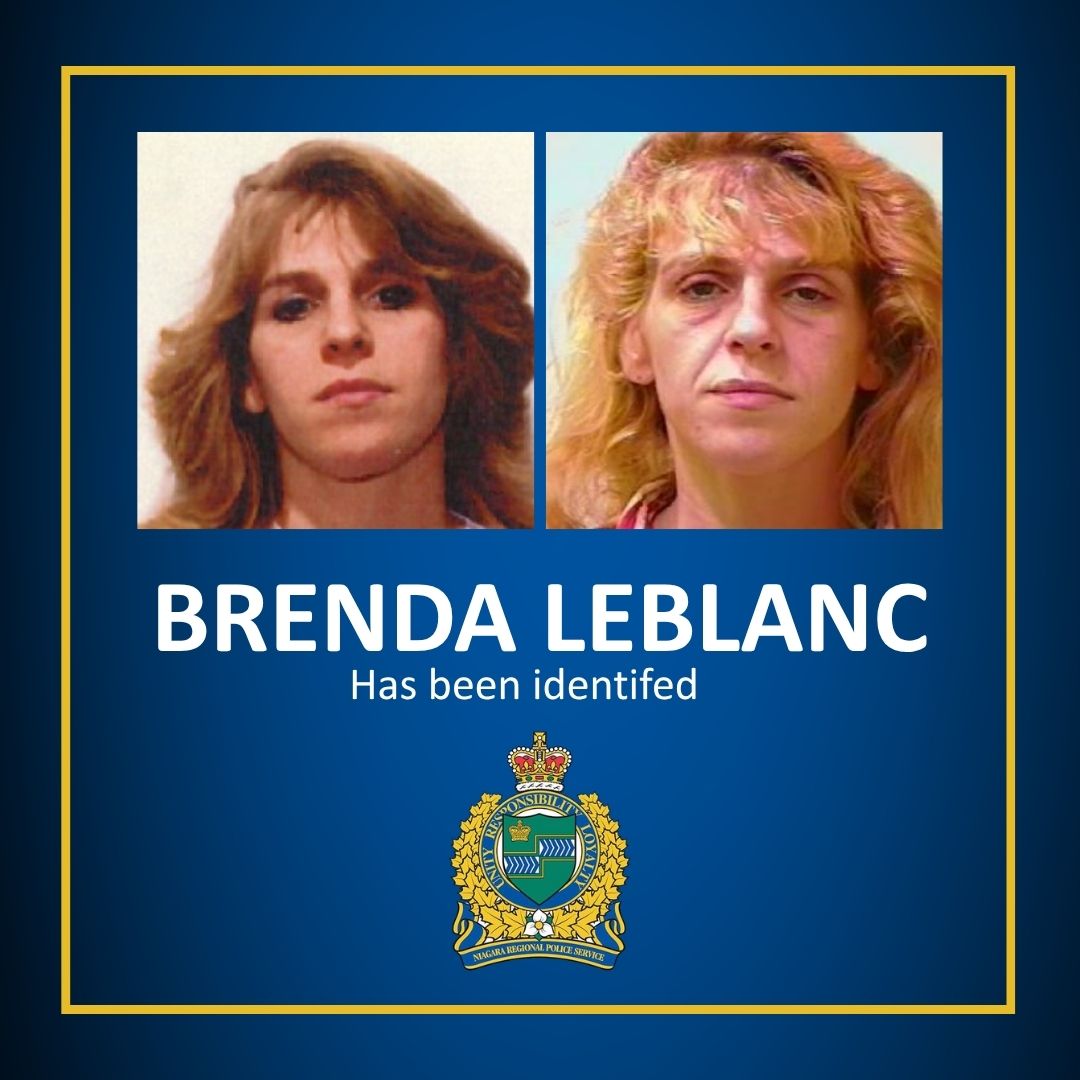
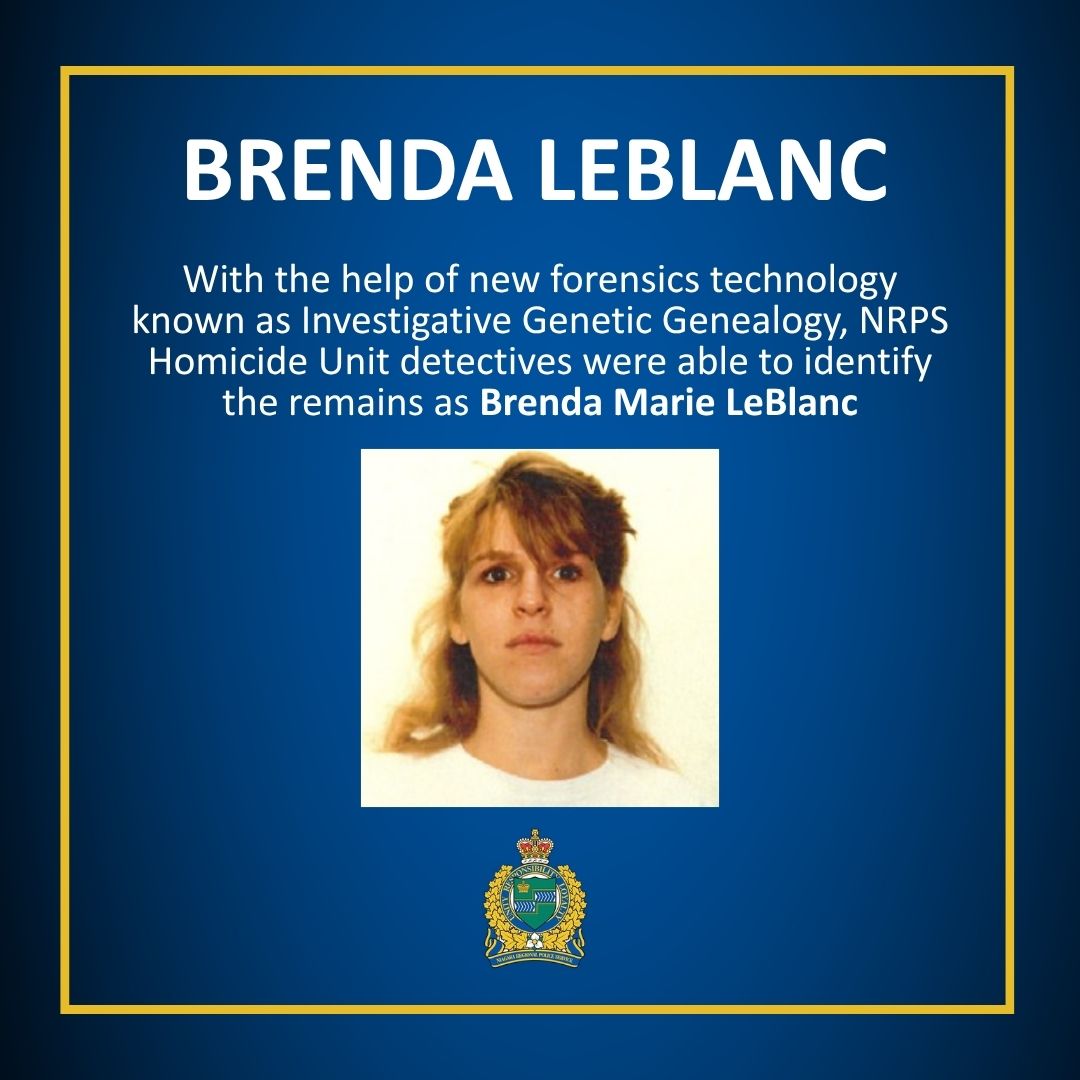
After an extensive investigation, including the use of Investigative Genetic Genealogy, we have identified those remains as Brenda Marie LeBlanc.

Now we need your help answering the next question: Who killed Brenda?

Our investigation has determined that Brenda's last known footprint of life was in the mid 1990's.

She lived in both Niagara Falls and St. Catharines and was originally from New Brunswick.

Someone knew Brenda. Someone may remember who she was with, where she lived, or something that didn't seem important at the time.

If you have any information, no matter how small, please contact the Niagara Regional Police Homicide Unit.

Your information could be the key to finally bringing Brenda, and her family, the justice they deserve.

Do you remember Brenda LeBlanc?

Call the Brenda LeBlanc Hotline: 289-248-1058

If you have information, no matter how small, please contact the Niagara Regional Police Service Homicide Unit.

Frequently Asked Questions

Investigative Genetic Genealogy (IGG) is an advanced forensic investigative technique that combines DNA analysis with traditional genealogical research to help identify unknown human remains or, in some cases, assist in identifying potential suspects.

IGG is used when conventional investigative methods, including fingerprint comparisons, dental records, and searches of criminal DNA databases, have been unable to identify a person.

In this investigation, IGG was used to help identify previously unidentified human remains. It was not used to identify a suspect.

Investigators first develop a DNA profile from the unidentified human remains.

That profile is then analyzed by forensic genealogy specialists, who compare it against DNA profiles that individuals have voluntarily submitted to genealogy databases that permit law enforcement use for unidentified human remains and homicide investigations.

Potential biological relatives are identified, allowing genealogists to construct family trees and identify possible family connections.

Investigators then use traditional police investigative techniques, including reviewing historical records, conducting interviews, and obtaining additional DNA samples where appropriate, to confirm the individual's identity.

Despite extensive investigative efforts following the discovery of the remains in 2023, the victim's identity could not be established using conventional investigative methods.

In 2025, investigators turned to Investigative Genetic Genealogy, which ultimately led to the identification of the victim as Brenda Marie LeBlanc.

Traditional forensic DNA testing compares DNA against known reference samples or profiles contained within approved law enforcement databases.

Investigative Genetic Genealogy uses DNA to identify possible biological relatives through genealogy research when no direct comparison exists, helping investigators identify previously unknown individuals.

No.

IGG is typically reserved for complex investigations where traditional investigative methods have been exhausted. It is a specialized technique that requires significant forensic expertise and careful legal and ethical consideration.

No.

IGG is an investigative lead-generation tool. Any information developed through genealogical research must be independently verified using conventional investigative methods before conclusions are reached.

Identifying a victim is often a critical step in a homicide investigation.

Knowing who the victim was allows investigators to better understand their background, relationships, movements, and circumstances leading up to their death. This information can generate new investigative leads and assist detectives in determining what occurred.

Contact Us

Niagara Regional Police Service
Headquarters 5700 Valley Way Niagara Falls,
ON L2E 1X8
T: 905-688-4111


1 District - St. Catharines & Thorold
T: 905-688-4111 Ext: 1024233

2 District - Niagara Falls & Niagara on the Lake
T: 905-688-4111 Ext: 1022200

3 District - Welland & Pelham
T: 905-688-4111 Ext: 1023300

5 District - Fort Erie
T: 905-871-2300 

6 District - Port Colborne & Wainfleet
T: 905-735-7811 

8 District - Grimsby, Lincoln & West Lincoln
T: 905-945-2211